Call us now :07315122196
 Send Inquiry
 Send Inquiry
3 Way Butterfly Valve
MOQ : 100 Kilograms
3 Way Butterfly Valve Specification
- Product Type
- 3 Way Butterfly Valve
- Material
- Cast Iron / Stainless Steel / Ductile Iron
- Type
- Wafer / Lugged / Flanged End
- Shape
- Round
- Technique
- Precision Casting
- Surface Treatment
- Epoxy Coated / Painted
- Standard
- IS 13095 / API 609 / BS EN 593
- Outer Diameter
- Up to 340 mm
- Length
- Standard / As per Application
- Inside Diameter
- 50 mm to 300 mm
- Wall Thickness
- 5 mm to 15 mm
- Tensile Strength
- Up to 520 MPa
- Grade
- SS304 / SS316 / CI GGG40
- Size
- 2 to 12 (DN50 to DN300)
- Color
- Blue / Silver / Customized
- Leakage Class
- Class VI (Bubble Tight Shutoff)
- Body Coating
- Fusion Bonded Epoxy / Powder Coated
- End Connection
- Wafer / Lugged / Flanged
- Flow Pattern
- Multi-directional
- Port Configuration
- 3 Way / T-port / L-port design
- Pressure Rating
- PN10 / PN16 / ANSI 150
- Compliance
- ISO 9001:2015 Certified
- Application
- Water, Gas, Oil, Chemical Industries
- Working Temperature
- -10°C to 120°C
- Seat Material
- EPDM / NBR / PTFE
- Disc Material
- Stainless Steel / Ductile Iron
- Stem Material
- Stainless Steel / Carbon Steel
- Operation
- Manual Lever / Gear Operated / Pneumatic Actuator
3 Way Butterfly Valve Trade Information
- Minimum Order Quantity
- 100 Kilograms
- Supply Ability
- 60000 Kilograms Per Week
- Delivery Time
- 2-7 Days
- Packaging Details
- Bundle packing
- Main Domestic Market
- All India
3 Way Butterfly Valve About
3 Way Butterfly Valve is an industry-specific product that is used to regulate, control and throttle the flow. The valve is characterized by its fast operational design, low-pressure drop, and other striking features. Owing to the accurate dimension and technically sound design, this valve can be easily installed.
Multi-Port Flexibility for Diverse Applications
The 3 Way Butterfly Valve stands out with L-port and T-port flow patterns, allowing for multiple configurations to direct or combine flow as required. Suitable for use in water, oil, gas, and chemical processes, this design improves operational flexibility and system efficiency across multiple industries. Its strong sealing and reliable operation make it well-suited for critical and demanding environments where precise flow control is essential.
Rugged Build and Enduring Protection
Manufactured from cast iron, stainless steel, or ductile iron, and protected with fusion bonded epoxy or powder coating, these valves excel in harsh environments. They provide strong resistance to corrosion, chemicals, and wear. With a bubble-tight shutoff and high tensile strength, users benefit from long service life and low maintenance requirements even under varying pressure and temperature conditions.
FAQs of 3 Way Butterfly Valve:
Q: How can I select the appropriate port configuration (T-port or L-port) for my application?
A: Choosing between T-port and L-port depends on your required flow pattern. T-port allows mixing or diverting flows in three directions, while L-port enables switching between two different outlets. Assess your process needs to determine which configuration best supports your systems operation.Q: What benefits do the different seat and disc materials offer for the 3-way butterfly valve?
A: The available seat materialsEPDM, NBR, and PTFEoffer varying resistance to chemicals, temperatures, and media. For aggressive chemicals or high temperature, PTFE is ideal; EPDM and NBR suit water, oil, or gas. Stainless steel and ductile iron discs provide durability and enhanced corrosion resistance, important for demanding applications.Q: When is it recommended to use a pneumatic actuator versus manual or gear operation?
A: Pneumatic actuators are suitable for automated or remote control operations, especially in systems requiring frequent actuation or quick emergency shutoff. Manual lever and gear operations are practical for less frequent operation or in locations where automation is unnecessary.Q: Where can the 3 Way Butterfly Valve be installed within an industrial plant?
A: This valve is commonly installed in piping systems for water, gas, oil, or chemical distribution, especially where flow direction needs regular adjustment. It fits both new installations and system upgrades, compatible with wafer, lugged, or flanged end connections.Q: What process is used to ensure the valve meets leakage Class VI (bubble tight shutoff)?
A: Each valve undergoes rigorous hydrostatic and leakage testing according to Class VI standards. This process ensures that, when closed, the valve provides a bubble-tight seal, thus minimizing any possibility of internal leakage and maintaining media integrity.Q: How does the fusion bonded epoxy or powder coated body enhance valve performance?
A: Fusion bonded epoxy or powder coatings provide a robust barrier against corrosion, chemical attack, and external environmental conditions. This ensures the valve maintains mechanical integrity, appearance, and operational safety even in aggressive or outdoor installations.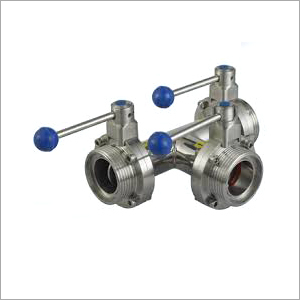
Tell us about your requirement

Price:
Quantity
Select Unit
- 50
- 100
- 200
- 250
- 500
- 1000+
Additional detail
Mobile number
Email


 Send Inquiry
Our Products
- Mild Steel Products
- Stainless Steel Products
- Carbon Steel Pipes and Tubes
- Metal Fasteners
- Forged Fittings
- Industrial Valves
- Brass Products
- Copper Products
- Titanium Product
- Hastelloy Product
- Nickel Product
- SS Fasteners
- Stainless Steel Nuts
- Stainless Steel Bolt
- Stainless Steel Washer
- Industrial Fasteners
- MS Seamless Pipes And Tubes

1st Floor, Office No.109, 719, Prasad Chambers, Opera House, Charni Road East,Mumbai - 400004, Maharashtra, India

Mr. Ashok Mehta
(Proprietor)
Mobile :07315122196
 Send Inquiry
 Send SMS
Developed and Managed by Infocom Network Private Limited.
