Call us now :07315122196
 Send Inquiry
 Send Inquiry
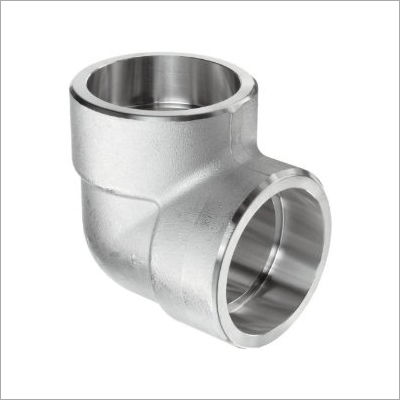
Buttweld Elbow
Price 250 INR/ Kilograms
MOQ : 100 Kilograms
Buttweld Elbow Specification
- Product Type
- Buttweld Elbow
- Material
- Stainless Steel, Carbon Steel, Alloy Steel
- Type
- Seamless / Welded
- Shape
- Elbow (Curved/Angled)
- Technique
- Hot Forming / Cold Forming / Mandrel Method
- Surface Treatment
- Pickled / Sand Blasted / Polished / Black Painted
- Standard
- ASME B16.9, ANSI B16.28, EN, DIN, JIS
- Outer Diameter
- As per requirement (typically 21.3 mm - 1219 mm)
- Length
- Based on angle and diameter (e.g., 90° or 45° elbows)
- Inside Diameter
- As per requirement (commonly ranges from 1/2 inch to 48 inch)
- Wall Thickness
- Sch 5S, Sch 10S, Sch 20, Sch 40, Sch 80, Sch 160, XS, XXS (custom as needed)
- Tensile Strength
- Depends on material (Stainless Steel: approx. 515 MPa min for grade 304)
- Grade
- ASTM A234 WPB, ASTM A403 WP304/316, ASTM A860 WPHY42/52/60, etc.
- Size
- 1/2 inch to 48 inch
- Color
- Metallic Grey / Black
- Feature
- Leak-proof, High Strength, Accurate Dimensions
- Corrosion Resistance
- High for Stainless Steel variants
- Heat Treatment
- Solution Annealed / Normalized / Quenched & Tempered (as applicable)
- Dimensional Accuracy
- ±0.5 mm or as required
- Pressure Rating
- Class 150, 300, 600, 900, 1500, 2500 (as per requirement)
- Packaging Type
- Wooden Box / Carton / Pallet as required
- Elbow Angle
- Available in 90°, 45°, and 180°
- Connection Type
- Butt Weld
- Hardness
- As per material specification (Typical: 70-90 HRB for SS304)
- Application
- Pipeline systems, Oil & Gas, Chemical Industry, Power Plants, etc.
- MOQ (Minimum Order Quantity)
- As per manufacturer policy
- End Type
- Bevel End
Buttweld Elbow Trade Information
- Minimum Order Quantity
- 100 Kilograms
- Payment Terms
- Cash in Advance (CID)
- Supply Ability
- 60000 Kilograms Per Week
- Delivery Time
- 2-7 Days
- Packaging Details
- Bundle packing
- Main Domestic Market
- All India
Buttweld Elbow About
Buttweld Elbow is a high-grade metallic fitting that is designed to use in industries for setting up or to extend existing pipeline. It is the most common type of welded pipe fitting. The elbow fitting allows change of direction of flow. Owing to its rugged construction and user-friendly design, the demand for below is increasing in the marketplace.
Engineered for Reliability and Versatility
Buttweld Elbows are fabricated to offer superior leak resistance and dimensional accuracy in demanding pipeline systems. Their availability in various materialsincluding robust grades like ASTM A234 WPB and A403 WP304/316ensures compatibility with harsh environments. Elbows undergo solution annealing or tempering, and their finishes range from sand blasted to polished, guaranteeing both performance and long-lasting protection against corrosion.
Global Standards and Customization Options
Meeting international standards such as ASME B16.9 and EN/DIN, these elbows support a wide range of pressure classes (150 to 2500) and sizes (1/2 inch to 48 inch). The flexibility in wall thickness, outer and inner diameters, and precise dimensional tolerances enables tailored solutions for any system requirements. Packaging ranges from wooden boxes to pallets to ensure safe delivery.
FAQs of Buttweld Elbow:
Q: How are buttweld elbows installed in pipeline systems?
A: Buttweld elbows are installed by welding the bevel-ended elbow directly to the pipeline. This creates a seamless, leak-proof connection suitable for high-pressure and critical applications, commonly using welding methods like TIG or MIG based on the material.Q: What materials are available for buttweld elbows and how do I select the right one?
A: Buttweld elbows come in stainless steel, carbon steel, and alloy steel. The choice depends on factors such as required corrosion resistance, pressure rating, application environment, and industry standards. Stainless steel is recommended for corrosive or sanitary applications, while carbon steel suits less aggressive conditions.Q: When should I choose a 90, 45, or 180 buttweld elbow?
A: The selection of angle depends on the required pipeline direction change. Use 90 elbows for sharp direction turns, 45 elbows for smoother transitions, and 180 return bends for reversing flow within compact spaces.Q: Where are buttweld elbows typically used?
A: These elbows are widely used in oil & gas pipelines, chemical plants, power generation facilities, and water treatment systemsanywhere robust, reliable changes in pipe alignment are necessary.Q: What is the manufacturing process for buttweld elbows?
A: Buttweld elbows are manufactured through hot forming, cold forming, or mandrel bending, followed by appropriate heat treatment such as solution annealing or tempering. This ensures the desired mechanical properties and dimensional stability are achieved.Q: How do buttweld elbows benefit my pipeline system?
A: Buttweld elbows provide high mechanical strength, precise dimensional accuracy, improved flow characteristics, and excellent leak-proof connections, making them ideal for demanding, long-duration applications in severe service environments.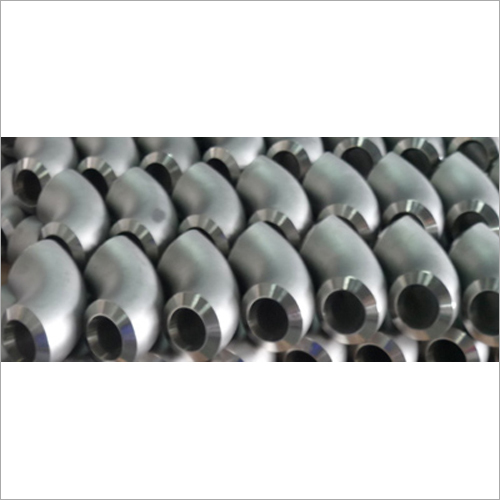
Tell us about your requirement

Price:
Quantity
Select Unit
- 50
- 100
- 200
- 250
- 500
- 1000+
Additional detail
Mobile number
Email

More Products in Forged Fittings Category
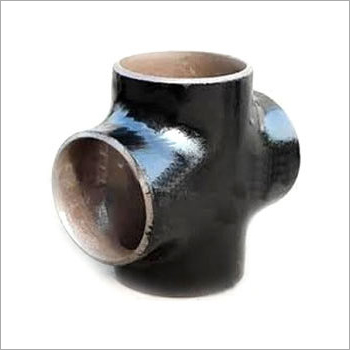
Carbon Steel Cross Fittings
Price 165 INR / Piece
Minimum Order Quantity : 100 Pieces
Material : Carbon Steel
Type : Other, Butt Weld / Forged / Threaded
Shape : Other, Cross
Grade : ASTM A234 WPB / WP11, A105, A106 Gr B, etc.
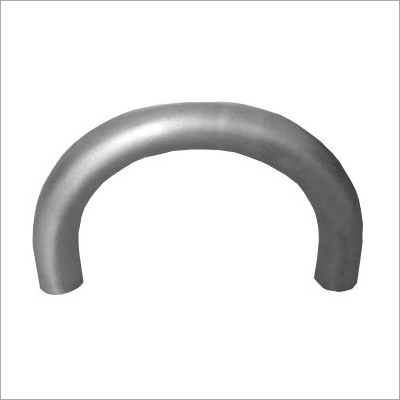
Seamless Returns
Minimum Order Quantity : 100 Kilograms
Material : Other, Carbon Steel / Alloy Steel / Stainless Steel
Type : Other, Pipe Fitting
Shape : Other, Return (180 Bend)
Grade : ASTM A234 WPB / ASTM A403 WP304/316 / ASTM A420 WPL6
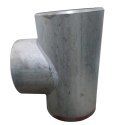
Stainless Steel Tee
Price 250 INR / Kilograms
Minimum Order Quantity : 100 Kilograms
Material : Stainless Steel
Type : Welded
Shape : Round
Grade : 304,316

 Send Inquiry
Our Products
- Mild Steel Products
- Stainless Steel Products
- Carbon Steel Pipes and Tubes
- Metal Fasteners
- Forged Fittings
- Industrial Valves
- Brass Products
- Copper Products
- Titanium Product
- Hastelloy Product
- Nickel Product
- SS Fasteners
- Stainless Steel Nuts
- Stainless Steel Bolt
- Stainless Steel Washer
- Industrial Fasteners
- MS Seamless Pipes And Tubes

1st Floor, Office No.109, 719, Prasad Chambers, Opera House, Charni Road East,Mumbai - 400004, Maharashtra, India

Mr. Ashok Mehta
(Proprietor)
Mobile :07315122196
 Send Inquiry
 Send SMS
Developed and Managed by Infocom Network Private Limited.
